
While sexual harassment can happen in any setting, it is more common in some industries than in others. Whether it’s the frequency of power imbalances, cultures that encourage workers to tolerate abuse, or other factors, certain types of jobs can be more vulnerable to harassment and exploitation.
Even in industries that experience the highest rates of sexual harassment, most victims do not report their abuse. The more we shine a light on sexual harassment in the workplace, the better we can understand and prevent it.
Table of Contents
- Are You Legally Required to Tell an Employer You Are Pregnant in a Job Interview?
- What Are Employers Allowed to Ask About Pregnancy?
- What Are Legal Protections for Pregnant Job Applicants?
- What Are the Pros and Cons of Disclosing Pregnancy in a Job Interview?
- What Should You Do If You Experience Pregnancy Discrimination in the Hiring Process?
- Contact Joseph & Norinsberg For Your Employment Law Cases
What Industries Have the Highest Rates of Sexual Harassment?
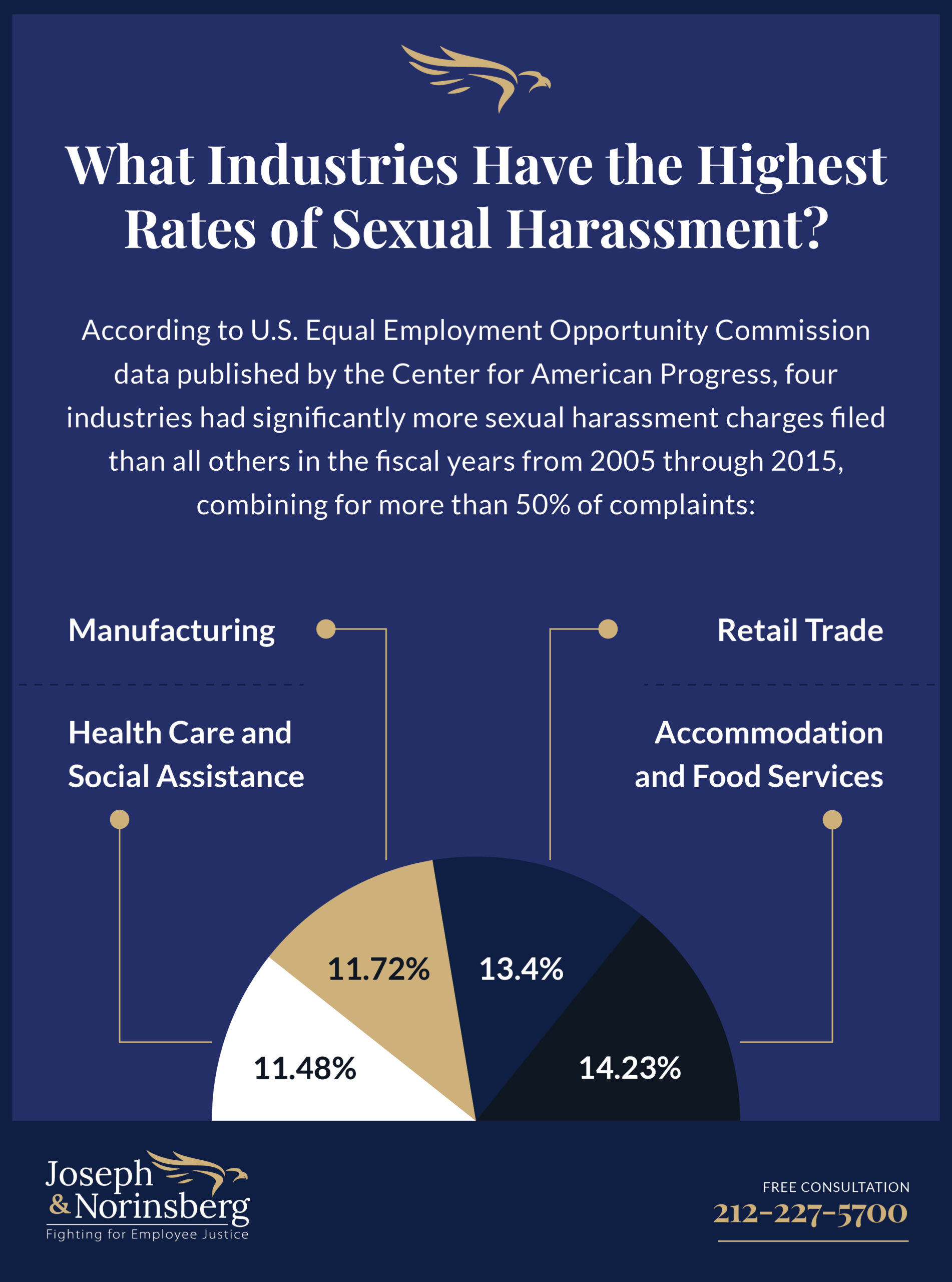
According to U.S. Equal Employment Opportunity Commission data published by the Center for American Progress, four industries had significantly more sexual harassment charges filed than all others in the fiscal years from 2005 through 2015, combining for more than 50% of complaints:
- Accommodation and food services, including restaurants and hospitality businesses, had the highest overall rate of sexual harassment, with 14.23% of all claims.
- Retail trade had the second-highest rate, making up 13.4% of sexual harassment claims filed with the EEOC.
- Manufacturing was the source of 11.72% of sexual harassment claims.
- Health care and social assistance workers filed 11.48% of sexual harassment charges.
Each of those four industries saw more than 4,500 EEOC sexual harassment charges that decade, and no other sector accounted for 7% or more of the total claims. However, only about half of the charges filed with the EEOC included data on which industry was involved. Sexual harassment is also commonly underreported, with up to 90% of victims never taking formal action—so the true number of offenses may have been much higher.
Why Is Sexual Harassment More Common in Certain Industries?
Some industries tend to feature situations that make sexual harassment more frequent or harder to prevent. Common causes of sexual harassment include:
- Power imbalances: Industries where those in positions of power have significant control over their workers’ pay, hours, job security, and other working conditions are often ripe for abuse. Academia and the military are additional industries where power structures can lead to high rates of sexual harassment.
- Customer-facing roles: Workers in retail and service often feel pressured to accept harassment from customers, as a significant portion of their income can come from tips. Confronting or upsetting a customer can lead to employment repercussions. Additionally, health care workers are often expected to deal with belligerent or violent patients.
- Male-dominated workplaces: Industries where female workers have historically been less common, such as manufacturing, may leave women subject to harassment or bullying. However, in contrast, female-dominated industries also have high rates of sexual harassment, as women file a significant majority of complaints.
- Toxic workplace culture: Some employers may tolerate sexual harassment by refusing to punish or prevent it. A culture of silence can then encourage further harassment when workers are afraid to speak up.
- Isolation: Those who work late hours or in private settings, such as home care workers, can be more vulnerable to sexual harassment and assault.
Which Workers Are Most at Risk?
Women are the most frequent victims of sexual harassment on a broad scale, but other marginalized groups are also common targets. LGBTQ+ employees may be vulnerable to sexual harassment in hostile work environments. Powerful managers or supervisors can exploit immigrants and part-time workers, as they tend to have low wages, minimal job security, and few HR protections.
What Should You Do If You Experience Sexual Harassment at Work?
If you’re being sexually harassed at work, it’s important to start taking action immediately. Here are some steps to take in response to workplace sexual harassment:
- Collect evidence. Take thorough notes of your experiences, including the date, time, and location, as well as the names of any witnesses to the conduct. Save any relevant written communications or documents that can help corroborate your claims.
- Review company policies. Look over your employer’s sexual harassment procedures to determine if the behavior explicitly violates its workplace rules.
- Go to HR. Filing a complaint with human resources can encourage your company to take action and stop the harassment. However, although it’s illegal to retaliate against a worker for reporting sexual harassment, the CAP data showed that almost three-fourths of all EEOC complaints involved some kind of retaliation.
- File a charge with the government. If your employer fails to resolve the problem, filing a complaint with the EEOC or a relevant state agency can trigger a formal, external investigation into the company. In many states, you must first pursue an administrative claim through the appropriate government agency before you can file a lawsuit.
When Should You Contact a Sexual Harassment Lawyer?
An experienced sexual harassment lawyer can be a helpful ally at any stage of the reporting process, especially if you encounter retaliation. Being illegally targeted by your employer for reporting sexual harassment can be intimidating, but it can also help prove your claims and solidify your case against the company.
Your attorney can help you gather evidence and properly file your claim to give you the best chances of success. Once an external investigation has begun, they can also help you negotiate a settlement resolving your case or bring your claims to court if necessary.
Contact Joseph & Norinsberg For Your Sexual Harassment Cases
If you’ve been sexually harassed at work, don’t suffer in silence for another day. The skilled New York employment law attorneys with Joseph & Norinsberg have more than 75 years of collective experience fighting for the rights of workers like you. We’re passionate about advocating for the underdog, and we’ll work relentlessly to get you the justice you deserve.
Contact us online or call 212-227-5700 today for a free consultation.