

Many New York workers have the misconception that sexual harassment can only happen in the office or on the job site. However, workers of all genders and sexualities may experience harassment outside the workplace at places like holiday parties, employer-sponsored events, and client meetings.
What many workers don’t know is that state and federal law protect them from sexual harassment by coworkers, supervisors, or third parties, even if it occurs outside of ordinary work hours or away from the office. If employers fail to prevent the harassment of a non-supervisory employee at a company-sponsored event, they can be held legally responsible.
Can Sexual Harassment Happen Outside the Workplace?
Sexual harassment can happen outside of traditional workplace environments. Modern work environments extend far beyond conventional workplaces, and harassment can still occur to remote workers via digital communication and at off-site events.
Sexual harassment is illegal under Title VII of the 1964 Civil Rights Act and the New York State Human Rights Law. Some local laws, including the NYC Administrative Code, also prohibit it. Many harassment laws do not require the harassment to occur at a specific physical workplace—the key factor is the relationship between the harasser and the victim, not the location.
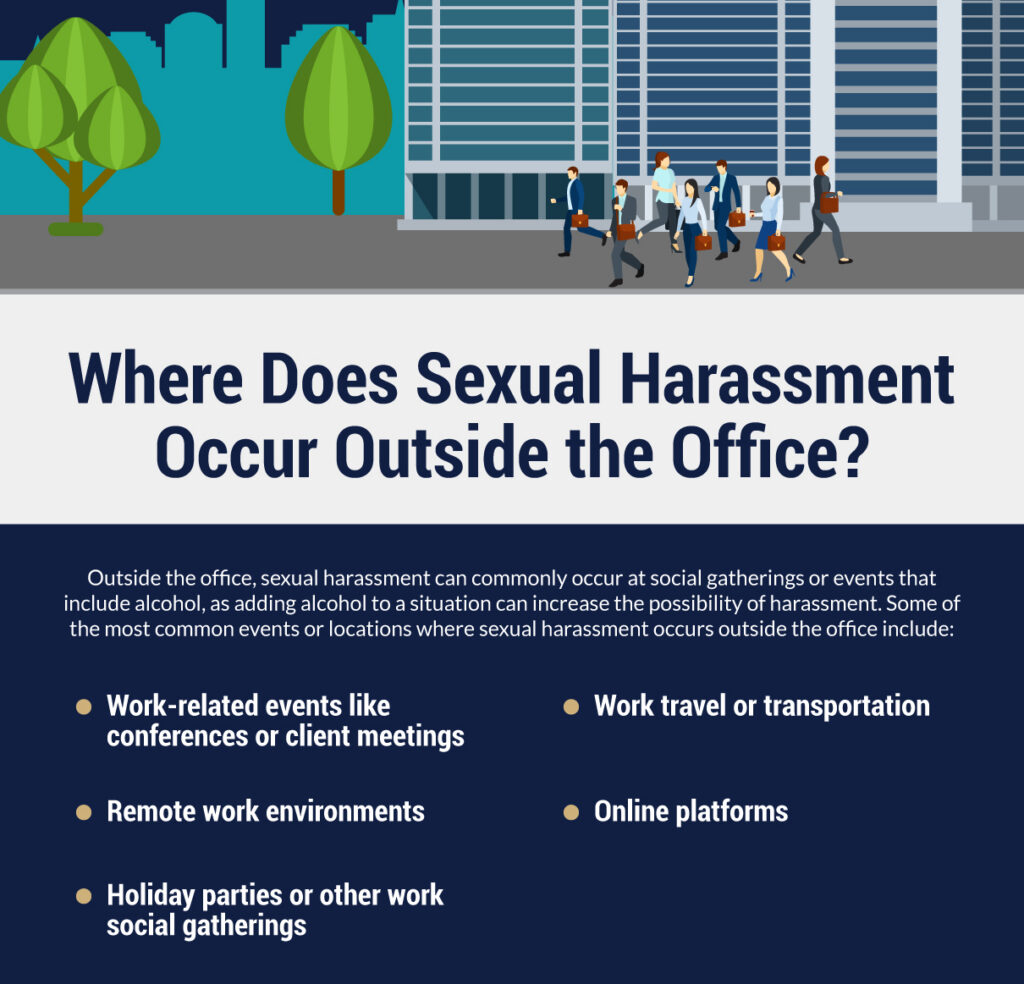
Where Does Sexual Harassment Occur Outside the Office?
Outside the office, sexual harassment can commonly occur at social gatherings or events that include alcohol, as adding alcohol to a situation can increase the possibility of harassment. Some of the most common events or locations where sexual harassment occurs outside the office include:
- Work-related events like conferences or client meetings
- Remote work environments
- Holiday parties or other work social gatherings
- Work travel or transportation
- Online platforms
What Constitutes Sexual Harassment?
Under New York law, sexual harassment is considered unlawful discrimination. A harasser can be a supervisor, coworker, or a third party, such as a client or contractor, and the impact on the victim is the same regardless of where the harassment occurs.
There are two main types of workplace sexual harassment: quid pro quo sexual harassment and hostile work environment. Quid pro quo sexual harassment involves demanding sexual favors in exchange for promotions, raises, or job assignments or to avoid a negative consequence, like a poor job review or termination. A hostile work environment occurs when conduct unreasonably interferes with a person’s ability to do their job or creates an intimidating workplace.
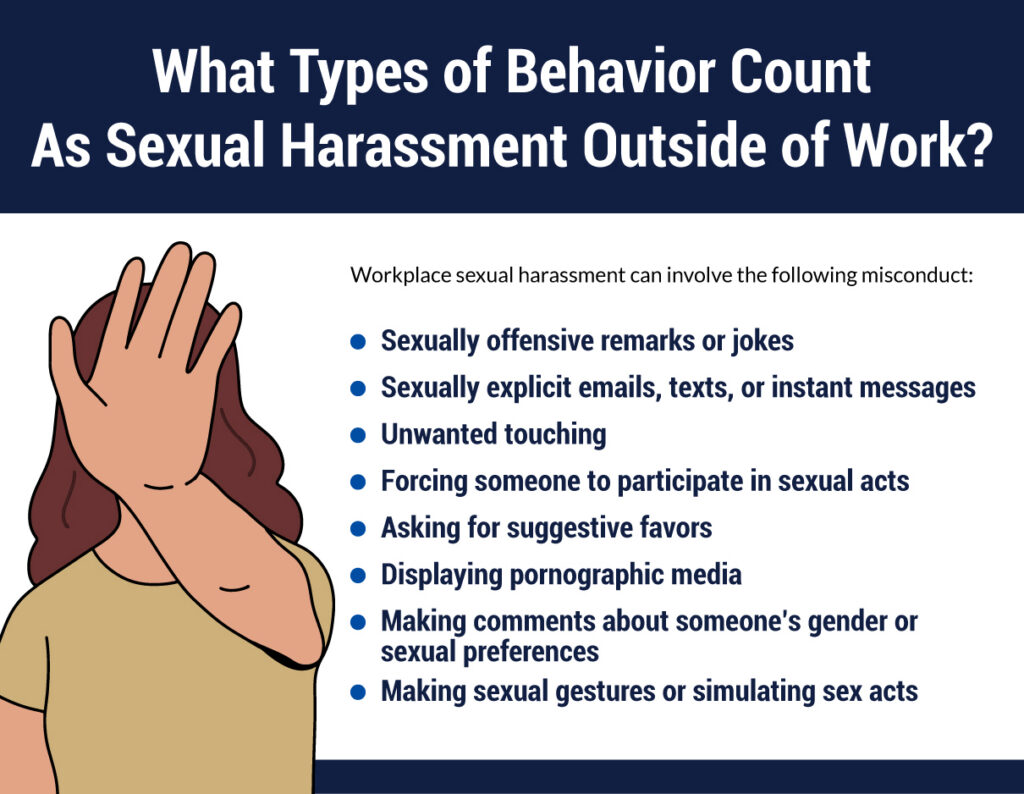
What Types of Behavior Count As Sexual Harassment Outside of Work?
Depending on the circumstances, a range of common behaviors outside the workplace may constitute unlawful sexual harassment. Harassment can rise to the level of a crime if it involves physical touching, confinement, threats, or forced sexual acts, but even if the harassment is not a criminal act, it is illegal.
Workplace sexual harassment can involve the following misconduct:
- Sexually offensive remarks or jokes
- Sexually explicit emails, texts, or instant messages
- Unwanted touching
- Forcing someone to participate in sexual acts
- Asking for suggestive favors
- Displaying pornographic media
- Making comments about someone’s gender or sexual preferences
- Making sexual gestures or simulating sex acts
If you have experienced any of the above behavior from a coworker, supervisor, client, or contractor at work or at work-related events or gatherings, it is crucial to collect evidence and document these behaviors.
What if an Employer Retaliates Against a Worker for Reporting Harassment?
In New York, it’s illegal for your employer to retaliate against you for reporting sexual harassment. Your employer cannot fire or demote you, cut your hours, or create a hostile environment because you spoke up or cooperated with an investigation. If you have experienced retaliation, you may have a legal claim. However, you must establish a connection between your complaint and the negative action taken by your employer.
Does Location Matter for a Sexual Harassment Claim?
For workplace sexual harassment claims, the relationship between the harasser and the victim is more important than the physical location of the harassment. Most human resources and employment policies cover off-site conduct related to the job. The law focuses on whether the behavior affects the employee’s work environment or employment conditions. This is true even for off-site harassment, such as at holiday parties, client meetings, company-sponsored events, and other similar gatherings.
Contact Joseph & Norinsberg For Your Sexual Harassment Cases
At Joseph & Norinsberg, our New York City employment lawyers have over 75 years of collective experience and a 90% success rate fighting for workers’ rights. For decades, we have fought relentlessly for clients who have experienced workplace discrimination, sexual harassment, and labor violations. We will listen. We will investigate. And if you have a case, we will fight relentlessly on your behalf to get you justice.
Joseph & Norinsberg’s workplace sexual harassment attorneys possess extensive knowledge of the constantly evolving field of employment law and a deep understanding of how these laws affect employees and job applicants. With a dedicated work ethic, exceptional trial skills, and deep empathy for each client, we’re ready to fight for you, no matter what it takes.
To learn more about your rights and legal options after experiencing sexual harassment, contact us online or call 212-227-5700 today for a free consultation.