
As of January 1, 2026, the minimum wage in New York City, Long Island, and Westchester County is $17.00 per hour for most employees. However, outside of these areas, the New York state minimum wage is set at $16.00.
In this article, the employment law attorneys at Joseph & Norinsberg discuss the minimum wage rates, their application to different types of workers, and steps to take if you believe you are receiving less than legally owed. For more information or to speak with a skilled wage and hour attorney, contact us today.
Table of Contents
- Current Minimum Wage Rates in New York
- Do Tipped Workers Have a Different Minimum Wage?
- Does the NY Minimum Wage Apply to Independent Contractors?
- Why Does Minimum Wage Vary by Region in New York?
- What if My Employer Pays Less?
- Does Joseph & Norinsberg Handle Wage Theft Claims?
- Contact A New York City Wage and Hour Claims Lawyer Today
Current Minimum Wage Rates in New York
For the calendar year 2026, New York has set varying statewide minimum wage amounts based on whether you work upstate or downstate, as shown below:
| Location | Minimum Hourly Wage |
|---|---|
| New York City | $17.00 |
| Long Island & Westchester County | $17.00 |
| Remainder of New York State | $16.00 |
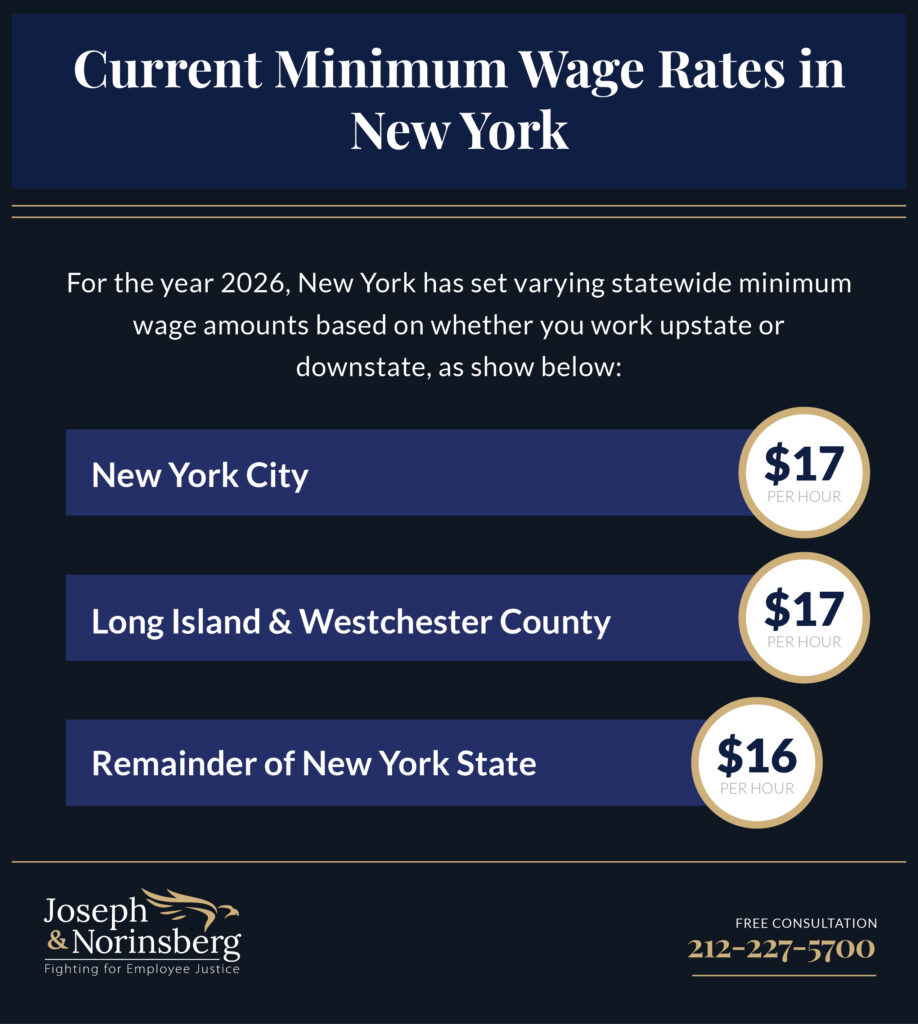
These rates are in effect from January 1, 2026, through December 31, 2026.
Do Tipped Workers Have a Different Minimum Wage?
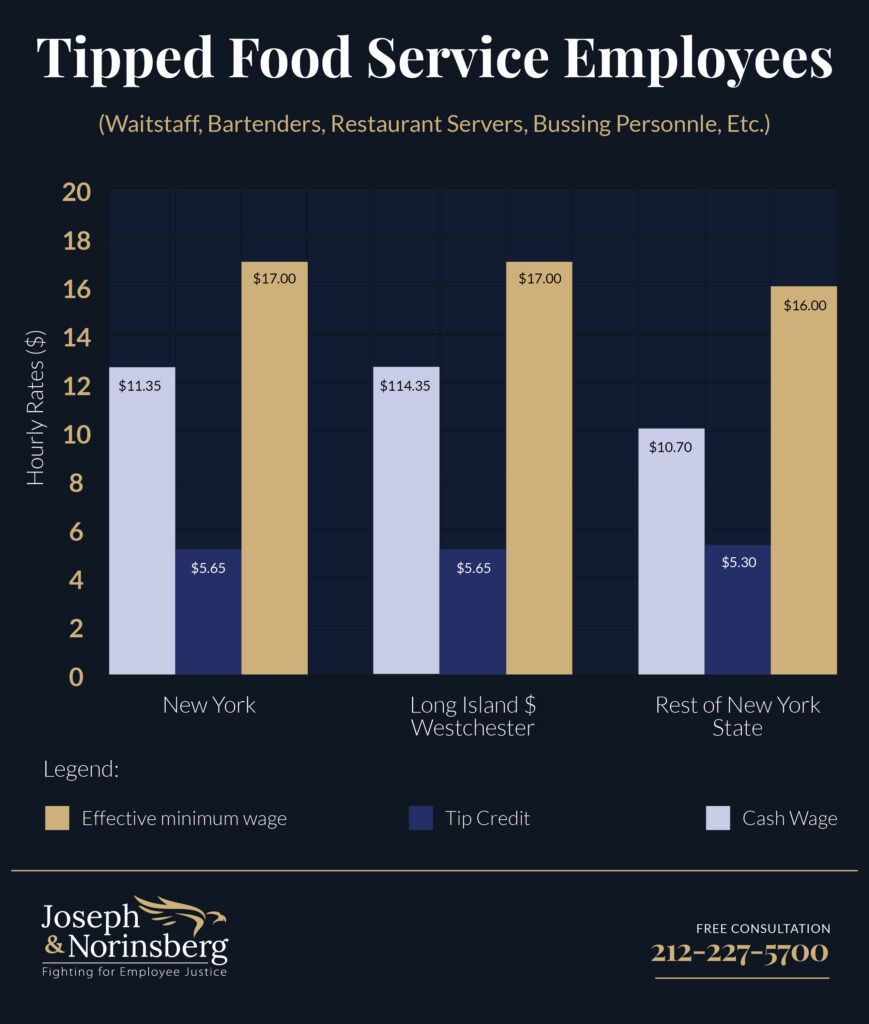
Yes, service workers in New York who receive tips have a lower cash wage. However, employers must ensure that total earnings—cash wages plus tips—meet at least the regional minimum wage. Many employers apply a tip credit to meet the full minimum wage. If tips do not make up the difference, the employer must pay the remaining amount.
This wage structure is typical in the restaurant, bar, and hospitality industries. Current cash wage and tip credit amounts may vary by location and whether you are a tipped food service employee or a tipped service employee. Below is a breakdown of both of these factors:
Tipped Service Employees (Valets, Hairdressers, Bellhops, Etc.)
| Location | Cash Wage | Tip Credit | Effective Minimum Wage |
|---|---|---|---|
| New York City | $14.15 | $2.85 | $17.00 |
| Long Island & Westchester | $14.15 | $2.85 | $17.00 |
| Rest of New York State | $13.30 | $2.70 | $16.00 |

Tipped Food Service Employees (Waitstaff, Bartenders, Restaurant Servers, Bussing Personnel, Etc.)
| Location | Cash Wage | Tip Credit | Effective Minimum Wage |
|---|---|---|---|
| New York City | $11.35 | $5.65 | $17.00 |
| Long Island & Westchester | $11.35 | $5.65 | $17.00 |
| Rest of New York State | $10.70 | $5.30 | $16.00 |
Does the NY Minimum Wage Apply to Independent Contractors?
The minimum wage rates in New York apply only to employees. Therefore, independent contractors—who run their own businesses or provide services under a contract without employer control—are not covered by minimum wage rules.
Misclassification is common, especially in contract work such as delivery services, short-term gigs, and freelancing. Being misclassified as an independent contractor can lead to serious issues for employees, depriving them of their legal right to minimum wage, overtime, and benefits. Workers who believe their employer has misclassified them can file a complaint with the New York Department of Labor.
Why Does Minimum Wage Vary by Region in New York?
New York State follows a geographically tiered wage system. This system sets minimum wage rates based on a location’s cost of living. Expensive areas will generally have higher minimum wage rates to reflect higher living costs, while regions with lower costs will have lower minimum wage rates. This distinction is why more expensive areas like New York City, Westchester, and Long Island set the minimum wage rate at $17.00, an entire dollar amount higher than the rest of the state.
What if My Employer Pays Less?
If your employer is paying you less than the required amount for your region, you may have a minimum wage theft case against them. The New York Wage Theft Prevention Act recognizes violations regarding both overtime and spread-of-hours pay.
Overtime violations occur when an employer fails to pay an employee entitled to overtime pay under state law 1.5 times the regular rate for hours worked over 40 per week. New York employees working a shift longer than ten hours in a day may be entitled to “spread of hours” pay, which is an extra hour at minimum wage. However, employers who underpay wages often skip these additional payments.
Seeking legal guidance for a potential case is your first step to being compensated for lost wages. Joseph & Norinsberg can help. We will launch a full investigation into your case and ensure you receive the justice you deserve.
Contact us today for a free consultation with our experienced employment contract lawyers.
Does Joseph & Norinsberg Handle Wage Theft Claims?
Our dedicated legal team at Joseph & Norinsberg has handled numerous wage theft claims and achieved favorable results. We are a New York City–based employment law firm with extensive experience in wage and hour disputes, including helping workers recover unpaid minimum wages, unpaid overtime, and other forms of wage theft under state and federal law.
We have extensive knowledge of the constantly evolving area of wage and hour claims and a deep understanding of how these laws impact workers.
Contact A New York City Wage and Hour Claims Lawyer Today
You have the right to the pay you’ve earned for the work you’ve done. If your employer is paying you below the legal minimum wage or otherwise failing to pay all wages owed, Joseph & Norinsberg is here to help.
Our wage and hour lawyers have more than 75 years of collective experience fighting for workers’ rights. We stress a relentless work ethic, exceptional trial skills, and empathy for each and every client.
Call us at 212-227-5700 for a free consultation to discuss your case and explain your legal options.